Quick Answers
- Off-plan projects carry construction delay risks
- Some areas face higher supply and rental pressure
- Currency movements can affect USD investment returns
- Property management quality impacts rental performance
- Proper due diligence reduces most investment risks
No investment is risk-free. The risks of buying property in Dubai are real, documented, and worth understanding before you commit a single dollar. That is precisely why this guide exists.
Dubai’s real estate market offers some of the most compelling returns available to American investors in 2026. Gross yields of 8 to 12 per cent, zero UAE property tax, and a dollar-pegged currency are not marketing claims. But the same market that delivers those numbers also carries specific risks that uninformed investors consistently underestimate.
This guide covers every major risk clearly and honestly, paired with the specific mitigation each one requires. Understanding the risks of buying property in Dubai fully is what separates profitable US investors from cautious ones who lose money on avoidable mistakes.
Market and Economic Risks
The broadest category of risks of buying property in Dubai relates to macro conditions that no single investor can control. Understanding these forces helps you time your entry correctly and hold through cycles without panic.
Price Volatility Risk
Dubai’s property market is cyclical. Prices surged by over 60 per cent between 2022 and 2025, according to Knight Frank’s Dubai residential research. However, the same market saw prices fall sharply during the 2008 global financial crisis and again during the 2020 pandemic period before recovering strongly in both cases.
Short-term investors who entered at cycle peaks in previous years and needed to exit quickly faced real capital losses. The risks of buying property in Dubai tied to price volatility are most acute for investors with short time horizons. For US investors planning a minimum five-year hold, the historical pattern of recovery and growth significantly reduces this risk. Buying at the right point in the cycle and holding through short-term fluctuations is the primary mitigation.
Oversupply in Districts
Not every Dubai district performs equally. Several areas, particularly mid-tier apartment segments outside the core freehold zones, have experienced oversupply that compresses rental yields and slows capital growth. An investor who buys in an oversupplied district may find their property sitting vacant longer than expected or attracting lower rental rates than the Dubai market average.
The risks of buying property in Dubai related to oversupply are almost entirely a function of area selection. Districts like Dubai Marina, Business Bay, and Jumeirah Village Circle have sustained demand-led tenant pools that buffer against oversupply. Emerging areas like Dubai South benefit from infrastructure-driven population inflows. Choosing the right area is the most important single decision in managing this risk.
Oil Price Dependency
Dubai’s economy has diversified significantly since 2008, with tourism, finance, technology, and logistics all contributing meaningfully to GDP. However, regional oil price movements still create ripple effects through the broader UAE economy that can influence investor sentiment and property demand in the short term.
Global economic downturns triggered by energy sector instability represent a background risk for anyone holding property in Dubai. This risk is best managed through a long-term investment horizon, strong area selection focused on demand-led districts, and avoiding over-concentration of investment capital in a single market.
The market and economic risks are real but manageable with the right entry strategy. The next category requires even more careful attention from US investors buying before a project is complete.
Financial and Hidden Costs
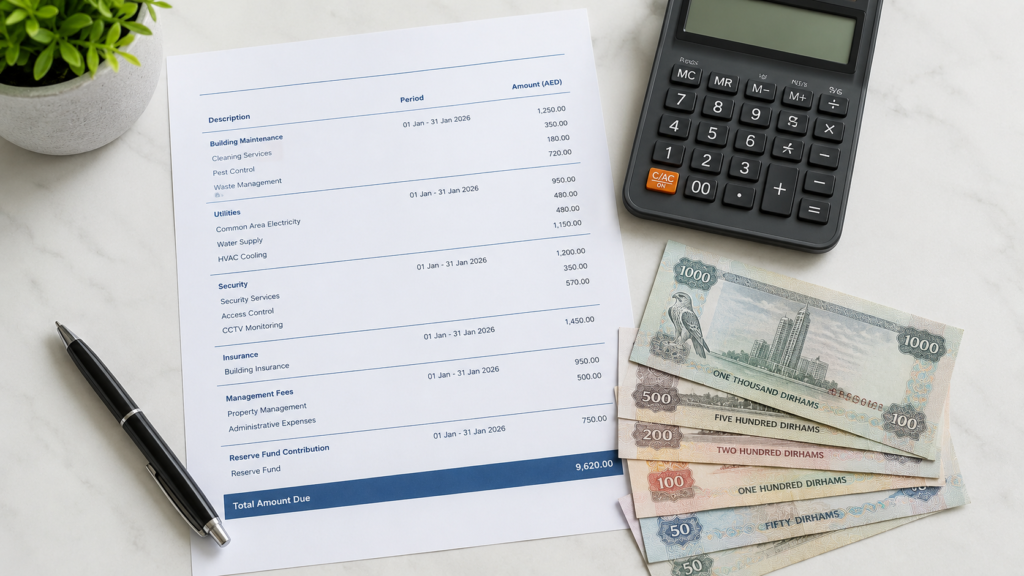
One of the most underestimated risks of buying property in Dubai for US investors is the full cost of ownership beyond the purchase price. Transaction costs and ongoing charges can materially affect your net return if not factored in before purchase.
Transaction Cost Breakdown
The one-time transaction costs when buying property in Dubai reach approximately 7 to 8 per cent of the purchase price. This is significantly higher than upfront costs in many US real estate markets and must be factored into your return calculations from day one.
| Cost Item | Amount | Notes |
| DLD Transfer Fee | 4% of purchase price | One-time government fee |
| Real Estate Agent Commission | 2% of purchase price | Buyer pays on the secondary market |
| DLD Registration Fee | AED 4,000 (approx. USD 1,090) | Fixed fee |
| Trustee Office Fee | AED 4,200 (approx. USD 1,145) | Paid at DLD transfer |
| Mortgage Registration Fee | 0.25% of the loan value | 4% of the purchase price |
On a USD 250,000 property, total transaction costs run approximately USD 17,500 to USD 20,000. These costs are incurred at entry and must be recovered through rental yield and capital growth before your investment reaches breakeven. For US investors running return models on Dubai property, including these costs in your calculation before committing is essential.
Service Charge Risk
Annual service charges are a recurring cost that directly affects your net rental yield. Charges cover building maintenance, security, common areas, and facilities. They are set by the developer and regulated by RERA, but they vary significantly across developments.
| Property Type | Typical Service Charge Range | Annual Cost on 700 sq ft Unit |
| Standard Apartment | AED 10 to 18 per sq ft | USD 1,900 to USD 3,440 |
| Premium Development | AED 18 to 30 per sq ft | USD 3,440 to USD 5,700 |
| Luxury Tower | AED 30 to 50 per sq ft | USD 5,700 to USD 9,500 |
Always obtain the RERA-approved service charge budget for any building you are considering before purchasing. High service charges in luxury developments can reduce an apparent 10 per cent gross yield to a net yield of 7 to 8 per cent after charges and management fees.
US Tax Obligations
US citizens face a specific financial risk that investors from other countries do not. The IRS requires American investors to report all worldwide income, including Dubai rental earnings. The UAE levies zero property tax, but that does not eliminate your US-side reporting obligations.
Failure to report foreign rental income, failing to file FBAR if your UAE bank account balance exceeds USD 10,000, or mishandling Form 8938 for foreign financial assets can result in significant IRS penalties. This is not a Dubai-specific risk, but it is a real financial exposure for unprepared US investors. Engaging a CPA experienced in foreign property income before your first purchase eliminates this risk entirely. For a complete breakdown of what US investors owe on Dubai earnings, see our guide on property tax in Dubai for foreigners.
Hidden costs are manageable when you know what to look for before committing. Legal and ownership risks of buying property require equal attention, particularly for US investors operating remotely.
Legal and Ownership Risks
The legal framework protecting buyers of property in Dubai is strong and government-backed. However, specific legal risks of buying property exist that US investors purchasing remotely must actively guard against.
Freehold Zone Confusion
Foreign nationals, including US citizens, can only purchase property with full ownership title in designated freehold zones. There are over 60 freehold zones in Dubai, but not all areas of the city are included. Purchasing outside a freehold zone as a foreign buyer creates a legally problematic ownership position that can be difficult and costly to unwind.
Always verify that any property you are considering sits within a designated freehold zone before signing anything. Every project featured through the Dubai Property Expo is located within confirmed freehold zones. For more information on freehold ownership rights for US investors, see our guide on buying property in Dubai for US investors.
Property Scam Risk
Remote US buyers are a target for fraudulent operators who use fake listings, impersonate developers, and, in some cases, forge Power of Attorney documents. The risks of buying property in Dubai related to scams are concentrated among investors who bypass official channels and engage with unverified contacts found through social media or unsolicited outreach.
The mitigation is straightforward. Verify every developer’s RERA registration through the DLD portal. Never transfer funds directly to an individual. All legitimate payments go to RERA-registered escrow accounts held by approved UAE banks. Use only RERA-licensed brokers who can be verified by registration number. Never sign any document without independent legal review.
Liquidity Challenges
Property in Dubai is a relatively illiquid asset compared to US stocks, ETFs, or REITs. Selling a Dubai property takes weeks, involves DLD transfer procedures, agent fees, and the time needed to find a qualified buyer at your target price. In oversupplied districts, this process can take significantly longer.
US investors who may need to access their capital quickly should not invest in Dubai property. This market suits investors with a clear minimum three to five year horizon who can hold through any short-term market softness without being forced to sell at an unfavourable price. Treating Dubai property as a long-term income-generating asset rather than a liquid position is the correct framing.
Legal risks are entirely preventable with proper due diligence. The final section pulls every mitigation together into a practical checklist for US investors.
How to Mitigate Every Risk
Every risk of buying property in Dubai covered in this guide has a clear, actionable mitigation. The table below summarises the complete risk and mitigation map for US investors.
| Risk Category | Specific Risk | Mitigation |
| Market Risk | Price volatility | Minimum 5-year hold, demand-led area selection |
| Market Risk | Oversupply | Focus on JVC, Marina, Business Bay, Dubai South |
| Off-Plan Risk | Construction delays | Buy from developers with clean completion records |
| Off-Plan Risk | Developer default | Verify the RERA escrow account before any payment |
| Off-Plan Risk | Project cancellation | RERA-registered developers only, DLD verification |
| Financial Risk | High transaction costs | Model full 7 to 8% upfront cost before purchasing |
| Financial Risk | Service charge erosion | Obtain the RERA-approved service charge budget upfront |
| Financial Risk | US IRS exposure | Engage a CPA with foreign property income expertise |
| Legal Risk | Freehold zone errors | Verify freehold zone status through the DLD portal |
| Legal Risk | Scams and fraud | RERA-licensed brokers only, escrow payments only |
| Legal Risk | Liquidity constraints | Commit only capital not needed for 3 to 5 years |
Applying every mitigation in this table does not eliminate investment risk entirely. What it does is reduce avoidable, foreseeable loss to near zero, leaving only the systemic market risks that any informed investor accepts as part of a high-yield international real estate position.
Start Your Dubai Investment Right
The risks of buying property in Dubai are real, but none of them is hidden, unmanageable, or unique to Dubai as a market. Every risk covered in this guide has a clear mitigation that informed US investors apply as standard practice before committing capital.
The investors who lose money in Dubai are almost always those who bypass the correct process. They engage unverified operators, purchase in oversupplied districts without yield analysis, or enter without understanding their US tax obligations. Every one of those mistakes is avoidable with the right guidance and the right professional support from day one.
Register today at dubaipropertyexpousa.com and meet the developers, advisors, and legal experts who will ensure your Dubai investment is structured correctly, protected fully, and positioned to perform from day one.

Frequently Asked Questions
Are the risks of buying property in Dubai higher than in the USA?
The risks of buying property in Dubai are different from those in the US, rather than uniformly higher or lower. Dubai offers superior yield and zero UAE property tax, but adds off-plan risk, remote management complexity, and US IRS reporting obligations. US investors who apply proper due diligence, work exclusively with RERA-licensed developers, and plan a minimum five-year hold consistently find the risk-adjusted return profile favourable compared to domestic alternatives. The key distinction is that most Dubai-specific risks are avoidable through correct process, whereas US market risks like rising interest rates and compressed cap rates affect all domestic investors regardless of due diligence quality. For a detailed comparison of what US investors pay versus Dubai owners, see our guide on property tax in Dubai for foreigners.
What is the biggest risk for US investors specifically?
The most underestimated risk specific to American buyers is US tax compliance failure. The UAE charges zero property tax, which can create a false impression that owning Dubai real estate carries no tax obligations. In reality, the IRS requires US citizens to report all foreign rental income, file FBAR if UAE bank balances exceed USD 10,000, and potentially file Form 8938 for foreign financial assets above defined thresholds. Penalties for non-compliance are significant and entirely avoidable with the right professional support. Engaging a CPA with international property experience before your first purchase is the single most important step a US investor can take to protect against this risk. Advisors at the Dubai Property Expo can refer you to qualified US tax professionals who specialise in foreign property income.
Is off-plan property in Dubai safe to buy?
Off-plan property in Dubai is safe when purchased from RERA-registered developers through the correct legal process. UAE Law No. 8 of 2007 mandates that all buyer payments for off-plan purchases go into government-supervised RERA escrow accounts. Developers cannot access these funds without verified construction milestone completion confirmed by independent inspectors. If a project is cancelled, buyers receive a full refund of escrowed funds. The residual risks are construction delays, which affect your timeline but not your capital, and in rare cases, project cancellation, which triggers the refund mechanism. Purchasing only from developers with strong completion track records, verified through the Dubai Land Department, reduces the risks of buying off-plan property in Dubai to a manageable level.
How do I verify a Dubai developer is legitimate?
Verification requires three steps. First, confirm the developer holds a current RERA license by searching their name or registration number through the DLD portal at dubailand.gov.ae. Second, verify that the specific project has a registered RERA escrow account, which confirms government supervision of your payments. Third, review the developer’s portfolio of completed projects, focusing on on-time delivery record and buyer satisfaction through independent review sources. Every developer presented at the Dubai Property Expo has been pre-screened against all three criteria by the Bright Realty International advisory team before being given access to the event. For a comprehensive guide to the legal framework protecting buyers, see our article on how US citizens buy property in Dubai.
Can I lose all my money buying property in Dubai?
Total capital loss when risks of buying property in Dubai through proper legal channels is extremely unlikely. RERA escrow regulations protect all off-plan payments in government-supervised accounts ringfenced from the developer’s other assets. DLD title deed registration protects completed property ownership. The scenarios that have resulted in partial losses for Dubai investors historically involve purchasing outside official channels, engaging unverified operators, or risks of buying property in severely oversupplied districts without adequate yield analysis. Investors who work exclusively with RERA-licensed developers, pay only into verified escrow accounts, and choose demand-led freehold areas are protected against the most serious loss scenarios by the regulatory framework itself.