Quick Answer:
- Freehold property in Dubai gives US investors full, permanent ownership of both the unit and the land it sits on.
- Over 60 designated freehold zones across Dubai are open to foreign nationals, including Americans.
- Freehold owners receive a Dubai Land Department title deed with no expiry date and no reversion clause.
- Owning qualifying freehold property in Dubai can unlock a 10-year UAE Golden Visa.
- The UAE charges zero annual property tax on freehold ownership, with no capital gains tax on sale.
American investors hear about Dubai’s zero-tax returns and double-digit yields. But one critical question follows immediately. Can you actually own that property outright, permanently, with full legal title? The answer is yes, through freehold property in Dubai.
Many US investors confuse freehold ownership with leasehold arrangements or short-term licenses. That confusion costs them confidence and time.
This guide clears everything up. You will learn exactly what freehold ownership means in Dubai, where you can buy, what legal rights you receive, what it costs, and how the process works as an American investor in 2026.
What Is Freehold Property?
Not all property ownership is equal. Understanding what freehold property in Dubai actually means, and how it differs from other structures, is the starting point for every informed investment decision.
Freehold Defined Simply
Freehold ownership means you own the property and the underlying land outright, indefinitely, with no expiry and no third-party holding a superior interest. When you purchase freehold property in Dubai, the Dubai Land Department registers a title deed in your name. That deed confirms permanent ownership with full rights to sell, rent, renovate, mortgage, or pass the asset to your heirs.
The concept was introduced in Dubai in 2002 when the government opened designated freehold zones to foreign buyers. Since then, freehold areas have expanded to over 60 zones covering the city’s most in-demand residential and investment communities. Furthermore, the legal framework protecting freehold owners has been continuously strengthened, making Dubai one of the most secure international property markets for American investors today.
Freehold vs Leasehold
Leasehold ownership gives you the right to use a property for a fixed term, typically between 30 and 99 years, after which ownership reverts to the original freeholder. Leasehold is a fundamentally weaker ownership structure for long-term investors. Additionally, leasehold properties command lower resale prices and are harder to mortgage with UAE or international lenders.
| Feature | Freehold | Leasehold |
| Ownership Duration | Indefinite | 30 to 99 years |
| Land Ownership | Yes, included | No |
| Resale Rights | Full, anytime | Transfers remaining term only |
| Mortgage Eligibility | Strong | Limited |
| Golden Visa Eligible | Yes | No |
| Inheritance | Full rights | Remaining term only |
Freehold property in Dubai carries no lease clock and no reversion clause. Your ownership does not weaken over time. As a result, virtually all US investors target freehold zones exclusively when entering the Dubai market. The table below shows the key differences clearly.
US Ownership Comparison
American investors often ask how freehold property in Dubai compares to owning real estate in the USA. The core ownership rights are equivalent. You hold the title, you control the asset, and you decide when and how to sell. The meaningful differences are financial. The UAE charges zero annual property tax on freehold ownership, zero capital gains tax on sale proceeds, and zero income tax on rental earnings at the emirate level.
On the other hand, US investors must still report Dubai rental income to the IRS under worldwide income rules. FBAR filing also applies if a UAE bank account exceeds USD 10,000 during the year.
These obligations are manageable with qualified professional support and do not diminish the structural advantage of freehold property in Dubai as an asset class for American investors.

Where to Buy Freehold Property?
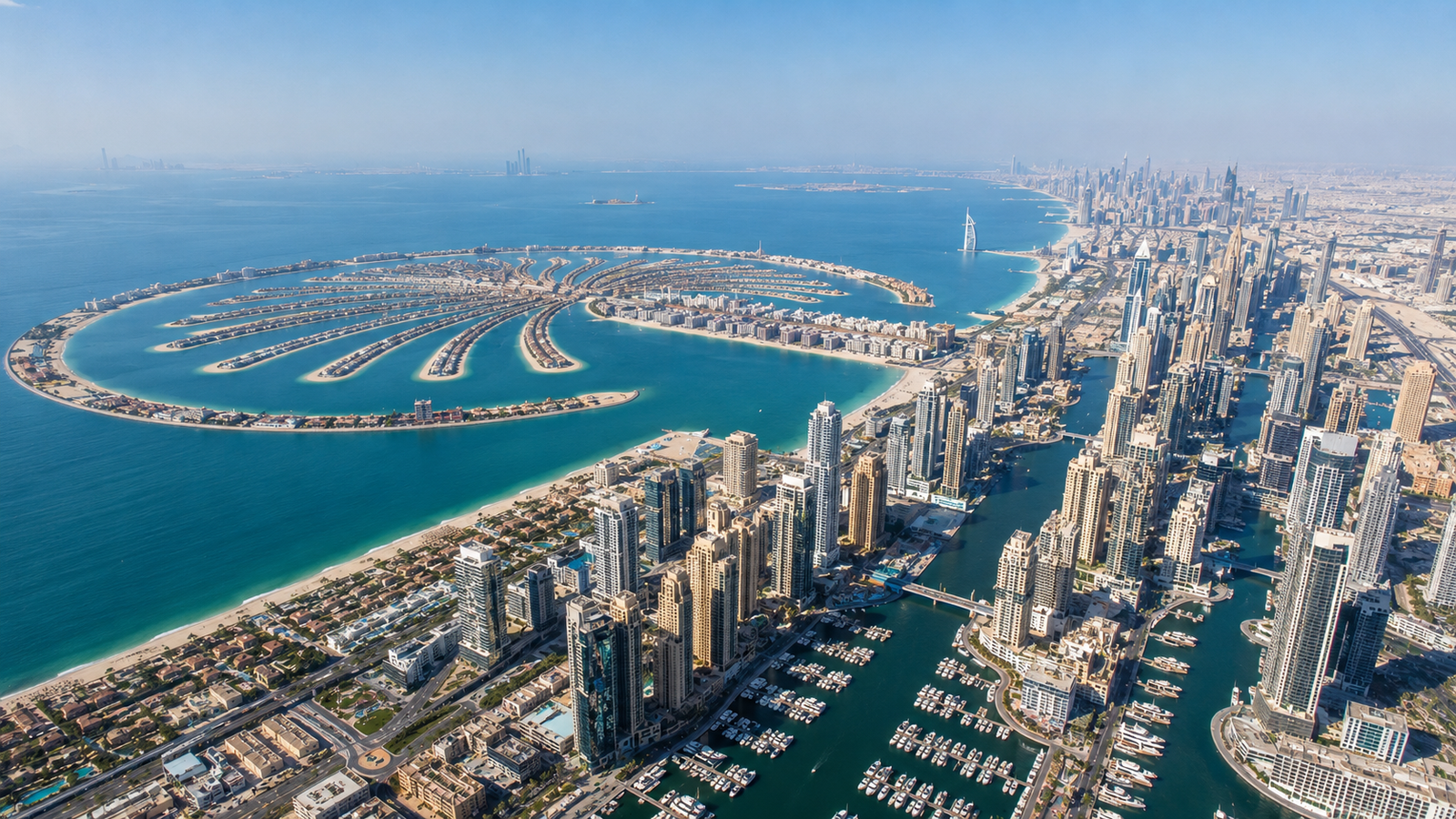
With over 60 designated zones available, area selection is the most financially significant decision an American investor makes when buying freehold property in Dubai. Each area has a distinct yield profile, entry price point, and growth trajectory.
Top Freehold Zones
According to Knight Frank’s Dubai residential research, prime freehold districts have delivered consistent transaction growth for three consecutive years, reflecting genuine end-user and investor demand rather than speculative activity. The most popular freehold zones for US investors combine accessible USD entry prices with strong, established rental demand.
Zone Comparison Table
| Freehold Zone | Gross Yield | USD Entry Price | Best For |
| Jumeirah Village Circle | 9 to 12% | From USD 130,000 | Maximum yield |
| Dubai South | 8 to 11% | From USD 100,000 | Long-term growth |
| Business Bay | 7 to 9% | From USD 200,000 | Corporate tenants |
| Dubai Marina | 7 to 9% | From USD 250,000 | Stability, liquidity |
| Dubai Creek Harbour | 7 to 9% | From USD 200,000 | Waterfront growth |
| Downtown Dubai | 5 to 7% | From USD 350,000 | Capital appreciation |
| Dubai Hills Estate | 6 to 8% | From USD 280,000 | Family villas |
Entry prices are subject to developer confirmation. All zones listed are designated freehold areas fully accessible to US citizens. For a detailed area-by-area breakdown, see our guide on buying property in Dubai for US investors.
Emerging Growth Areas
Beyond established zones, several emerging freehold communities offer compelling upside for US investors with a five-plus year horizon. Dubai South is expanding rapidly around the Al Maktoum International Airport development, which is currently undergoing a major capacity increase. Dubai Creek Harbour, developed by Emaar, positions investors ahead of a planned skyline centrepiece that is designed to surpass the Burj Khalifa in height upon completion.
Most importantly, these emerging freehold areas offer entry prices significantly below their long-term potential value. US investors who purchased in Dubai Marina and Business Bay a decade ago saw appreciation that significantly exceeded initial projections. For investors researching freehold property in Dubai today, emerging zones represent the equivalent opportunity. All freehold projects across these areas are showcased at the Dubai Property Expo, where you can compare options side by side with verified developers.
Area selection is a financial decision that deserves equal attention to the purchase price itself. Once the right zone is identified, your legal rights as a freehold owner are extensive.
Legal Rights You Get
When you purchase freehold property in Dubai and receive a DLD-registered title deed, you hold a comprehensive, government-protected set of ownership rights that apply indefinitely.
Full Title Rights
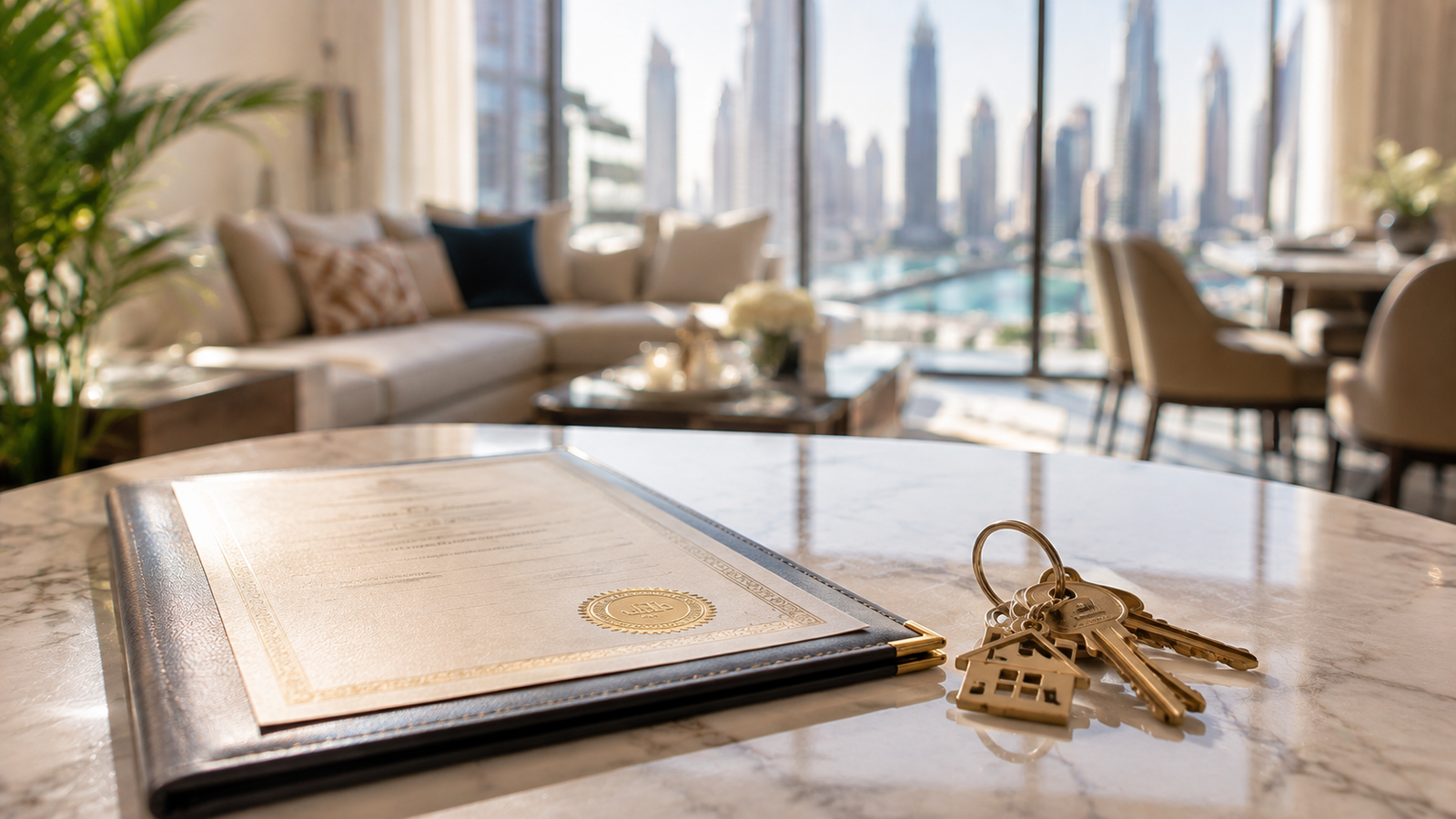
A DLD-registered freehold title deed gives US investors the right to sell at any time with no government restriction. You may rent the property on a long-term or short-term basis and collect income. You may renovate the interior within building management guidelines. You may mortgage the property with a UAE or international lender. You may include it in your estate planning and pass it to your chosen heirs.
Additionally, the title deed is stored in the DLD central registry and cannot be altered, transferred, or encumbered without your written consent and formal DLD process. For US investors managing freehold property in Dubai remotely, this government-backed registry provides the same security as a recorded deed in any US county system. For the complete legal framework covering American buyers, see our guide on US citizens buying property in Dubai in 2026.
RERA Buyer Protection
All purchases of freehold property in Dubai are protected by the Real Estate Regulatory Agency, the government body that licenses developers, supervises escrow accounts, and enforces buyer rights throughout the transaction. Under UAE Law No. 8 of 2007, all off-plan buyer payments must be held in RERA-supervised escrow accounts. Developers cannot access those funds without independent verification of specific construction milestones.
As a result, your capital is protected from the moment of reservation through to title deed issuance. If a project is cancelled, the DLD enforces a full refund of escrowed funds. This protection applies equally to US investors purchasing remotely via power of attorney. The RERA framework gives freehold property in Dubai a level of off-plan buyer protection that most international real estate markets, including many US states, do not match.
Golden Visa Eligibility
One of the most significant benefits of owning freehold property in Dubai as a US investor is the pathway to UAE long-term residency. Investors who purchase qualifying freehold property above the AED 2 million threshold, approximately USD 545,000 at the current fixed exchange rate, become eligible to apply for a 10-year renewable UAE Golden Visa.
The Golden Visa does not require full-time UAE residence. It gives you the legal right to reside in the UAE, open UAE bank accounts, and sponsor immediate family members. A 2-year investor visa is also available for freehold purchases above AED 750,000, approximately USD 204,000. For US investors pursuing international diversification at both the asset and residency level, freehold property in Dubai delivers a combination no other major investment market currently matches.
These ownership rights are secured through a clear, government-monitored purchase process that American investors can complete entirely from the USA.

How to Buy Freehold Properties?
The process to purchase freehold property in Dubai follows a fixed, transparent sequence. Every stage is monitored by the Dubai Land Department, and every payment is protected by the RERA escrow regulation.
Step-by-Step Process
The table below summarises the complete purchase sequence for US investors buying freehold property in Dubai in 2026.
| Step | Action | Timeline |
| 1 | Select the property and verify the RERA registration | 1 to 2 weeks |
| 2 | Pay the booking fee and receive the unit reservation | 3 to 5 days |
| 3 | Sign Sales and Purchase Agreement (SPA) | 1 week |
| 4 | Make stage payments per plan into escrow | Per SPA schedule |
| 5 | Obtain a No Objection Certificate from the developer | 1 to 2 weeks pre-handover |
| 6 | Complete DLD registration and title deed issuance | 2 to 4 weeks |
The most efficient starting point for US investors is the Dubai Property Expo, where verified developers present freehold property in Dubai projects across all major zones in one session. This eliminates weeks of independent research and the risk of engaging unverified operators online.
Remote Purchase Options
Americans can purchase freehold property in Dubai without visiting the UAE at any stage. A power of attorney arrangement authorises a designated representative in Dubai to sign documents, attend DLD registration appointments, and manage any step requiring physical presence. All payments are made by international SWIFT wire transfer from a US bank account.
For example, the SPA is signed digitally using recognised e-signature platforms. Virtual property tours and video developer consultations are standard for international buyers. Additionally, the USD-AED peg, fixed at 3.67 AED per USD since 1997, means there is no exchange rate risk on any transfer. Your wire converts at the same fixed rate every time. For a complete remote buying walkthrough, see our guide on buying property in Dubai for US investors.
Cost Breakdown Table
US investors purchasing freehold property in Dubai face a transparent, fixed cost structure. Total transaction costs run approximately 7 to 8 per cent of the purchase price, all disclosed upfront.
| Cost Item | Amount | Notes |
| DLD Transfer Fee | 4% of the purchase price | One-time, paid at registration |
| Real Estate Agent Commission | 2% of the purchase price | Secondary market purchases |
| DLD Registration Fee | AED 4,000 (approx. USD 1,090) | Fixed government fee |
| Trustee Office Fee | AED 4,200 (approx. USD 1,145) | Paid at DLD transfer |
| Developer NOC Fee | AED 500 to AED 5,000 | Developer clearance certificate |
| Annual Service Charge | AED 10 to 30 per sq ft | Building maintenance and facilities |
For a full breakdown of ongoing costs and US tax obligations on Dubai property income, see our guide on property tax in Dubai for foreigners.
Start Owning Dubai Property Today
Freehold property in Dubai gives US investors what the domestic market rarely delivers: permanent full title, zero UAE property tax, 8 to 12 per cent gross rental yields, and a dollar-pegged currency that removes exchange rate risk entirely. The legal protections are government-backed, the process is transparent, and the financial case in 2026 is stronger than it has been at any recent point for American buyers.
The risks are manageable, the documentation is straightforward, and the RERA escrow system protects every dollar you commit from reservation through to title deed registration. US investors who act with the right professional guidance consistently find that the Dubai market delivers exactly what the headline numbers promise.
Register today at dubaipropertyexpousa.com and secure your place at the next event in your city.
Frequently Asked Questions
What does freehold property in Dubai mean?
Freehold property in Dubai means you own the unit and the underlying land outright with no expiry date and no reversion clause. The Dubai Land Department registers your ownership in a government-backed title deed. You hold full rights to sell, rent, renovate, mortgage, and pass the property to your heirs indefinitely. This is fundamentally different from leasehold ownership, where your rights expire at the end of a fixed term. For US investors, freehold is the only ownership structure that provides a permanent answer to the question of whether you can own Dubai property forever.
Can Americans buy freehold property in Dubai?
Yes. Americans can buy freehold property in Dubai in any of the 60-plus designated freehold zones with full legal ownership rights. No UAE residency, local sponsor, or special government approval is required. A valid US passport is the only identification needed to begin the purchase process. All transactions are registered with the Dubai Land Department, and RERA escrow regulations protect all buyer payments throughout the process. US investors hold the same legal ownership rights as any other foreign buyer, with no nationality-based restrictions of any kind.
Which freehold area in Dubai is best for rental yield?
Jumeirah Village Circle consistently delivers the highest gross yields for investors in freehold property in Dubai, typically ranging from 9 to 12 per cent on studios and one-bedroom units. Dubai South offers comparable yields of 8 to 11 per cent with stronger capital appreciation potential tied to ongoing infrastructure investment. Business Bay and Dubai Marina offer slightly lower but more stable yields of 7 to 9 per cent, supported by strong corporate and professional tenant demand. The right area depends on your budget, target yield, and investment timeline. Advisors at the Dubai Property Expo can match you to the right freehold zone based on your specific USD budget and return objectives.
Do I need to visit Dubai to buy freehold property?
No. Americans can purchase freehold property in Dubai entirely remotely without visiting the UAE. A power of attorney arrangement covers all in-person requirements. The SPA is signed digitally. All payments are made by international SWIFT wire transfer. The USD-AED peg removes all currency risk on transfers. Virtual tours and video developer consultations are standard practice for US buyers. Many American investors visit Dubai for the first time after they have already purchased their freehold property, having completed the entire purchase from the USA, with full legal protection in place.
What happens when I sell freehold property in Dubai?
When you sell freehold property in Dubai, the transaction is processed through the Dubai Land Department with a formal title deed transfer. The UAE charges zero capital gains tax on sale proceeds. You negotiate your sale price, the DLD registers the transfer, and your net proceeds are yours to repatriate to the USA without UAE restriction. US citizens must report the capital gain to the IRS under worldwide income rules. The gain is calculated as the difference between your adjusted cost basis and your sale price, with long-term federal capital gains rates applying to properties held over one year. A CPA experienced in foreign property can minimise your US liability through correct basis calculation and available deductions.